
How One Bag of Groceries Changes a Week
It starts with a grocery list.
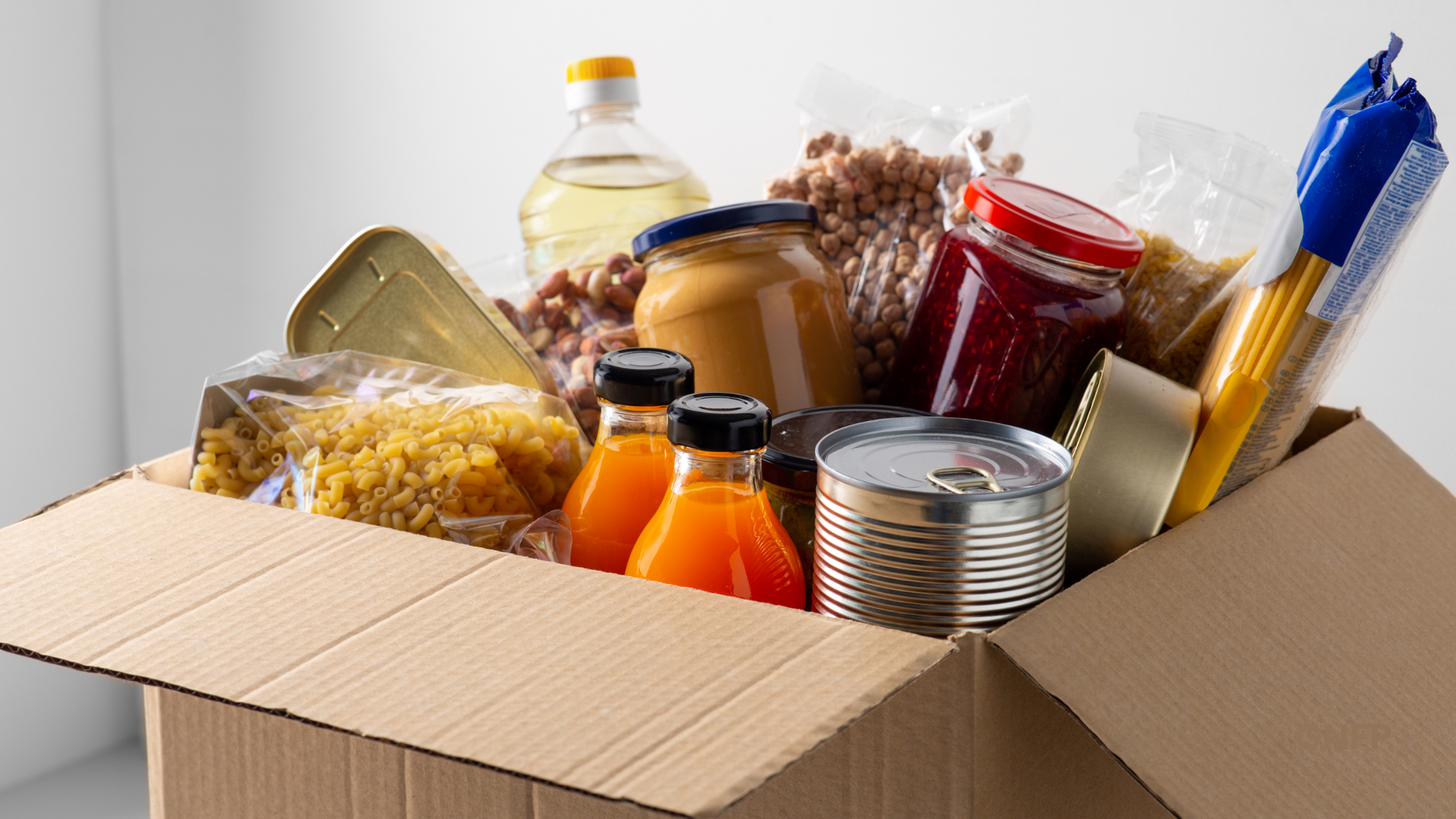
Someone in our community stands in the cereal aisle — the same one Maria stood in a few weeks ago — but this time, they’re not doing math for themselves. They’re picking up an extra box of pasta, a few cans of vegetables, a jar of peanut butter. Small additions to their own cart. Nothing dramatic. Just a decision to buy a little more than they need.
That’s where the ripple begins.
Stop One: The Purchase
Those few items find a home in one of our Green Bags, wherever you have it set aside in your home. I keep mine in the hall closet, as a reminder not only to buy 1-2 extra items, but also to put the bag on the porch on pickup day.
To a food donor, it might feel like a small gesture — five extra minutes, a few extra dollars. But that bag is part of something bigger.
Stop Two: The Volunteers
Every other month, one of our Neighborhood Coordinator volunteers drives around their neighborhood to pick up the Green Bags that have been left on front porches. They drop that bag off alongside dozens of others collected from across Georgetown.
Another group of volunteers has already set up tables and tents for the drive-through style drop off. Each person checks expiration dates, groups items by category, and fills boxes destined for one of our partner food pantries.
It’s not glamorous work — it’s checking labels, lifting boxes, and it’s outdoors no matter how hot or cold it is outside. They know that it only takes 2-3 hours on a Saturday morning, and it’s only 6 times a year.
They don’t know whose home that pasta will end up in. They just know it needs to be ready when someone visits the pantry.
Stop Three: The Pantry Shelf
For a short time, that box of pasta sits on the pantry shelf next to hundreds of other items, all waiting. This is the quiet middle of the journey — the moment where a single donation becomes part of a much larger safety net for our neighbors.
Stop Four: The Family
Then someone walks in. Maybe it’s a parent who just had their hours cut. Maybe it’s a retiree stretching a fixed income further than it was ever meant to go. Maybe it’s someone none of us would guess is struggling at all.
They leave with that box of pasta — along with several days’ worth of other groceries — and go home to make dinner for their family. A meal that, a few weeks earlier, was just an idea in a stranger’s grocery cart.
The Part We Don’t Always See
Here’s what’s easy to miss in all of this: every single person in that chain is a neighbor. The donor lives down the street. The volunteer might be a retired teacher or a college student. The family receiving the groceries could be the person who waved at you in the parking lot last week.
Food insecurity can feel like a big, faceless problem. But the solution is made up entirely of small, human moments — a donor’s five minutes, a volunteer’s Saturday, a shelf getting restocked, a family getting through the week a little easier.
None of those moments require someone to solve hunger all by themselves. They just require someone to be one link in the chain.
You’re Already Part of This
If you’ve ever donated a can of soup, sorted a shelf, or shared one of our posts, you’ve already started a ripple like the one above. Somewhere, right now, the contents of a bag you helped fill might be sitting on a shelf, waiting for the next stop in its journey.
That’s the quiet magic of this work: no single person carries the whole weight. We each carry just a little piece of it — and together, that’s enough to change someone’s week.
Want to start a ripple of your own? Donate, volunteer, or share our story. You never know whose table it might end up on.